.png)
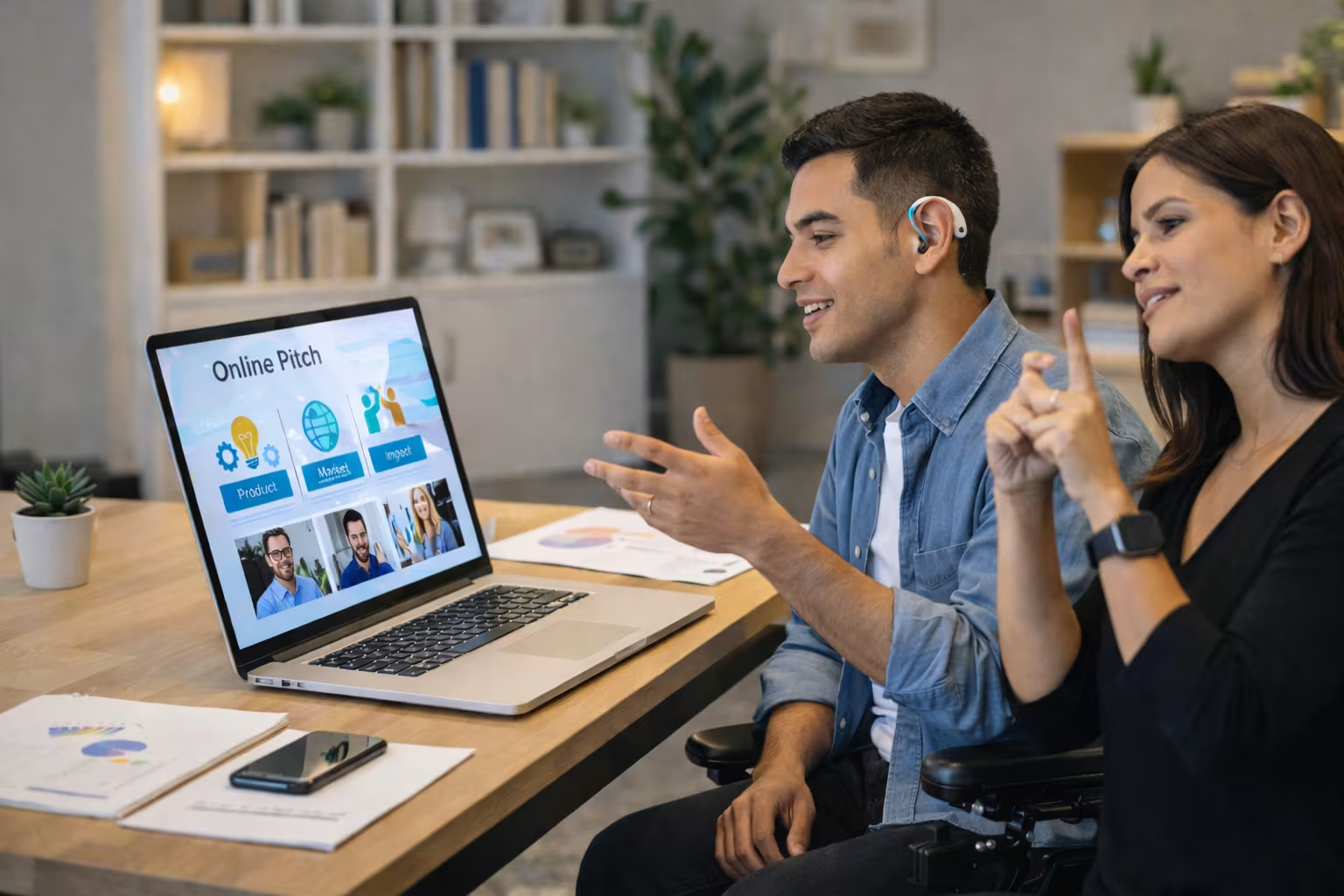
At some point in the past year, something shifted.
It didn’t happen in a single meeting, pitch, or announcement. It happened slowly, across screens, cities, and conversations. In a WhatsApp message between founders. In a pitch that landed differently. In a founder realizing they were no longer building alone.
That is what 2025 looked like for the Accessible Ecosystem in Latin America and the Caribbean.
Not a program. Not a pilot. An ecosystem in motion.
When Access Meets Ambition
The Accessible Ecosystem was built on a simple but radical belief: when founders with Disabilities have access, community, and the right support, innovation accelerates for everyone.
Throughout 2025, that belief took shape across Latin America and the Caribbean through Venture Labs and Accelerator, two programs designed to meet founders where they actually are, not where the ecosystem expects them to be.
Ideas became prototypes. Prototypes became companies. And companies became proof points.
Eighty entrepreneurs joined this journey. Thirty-six startups were incubated. Twenty-six were accelerated. But those numbers only tell part of the story. The real transformation happened in confidence, clarity, and connection.
Founders Who Changed the Room
In Venture Labs, we watched founders test ideas that were deeply personal and undeniably ambitious. Hugo Farfán turned CaféLSA into more than a café. It became a statement. A Deaf-led business, operating fully in Argentine Sign Language, showing that inclusion can be operational, cultural, and profitable at the same time. Dafna Yankillevich reimagined safety itself, designing technology that can be heard, seen, and felt.
In the Accelerator, founders moved from vision to scale.
Keila Barral Masri showed how health data, when handled ethically and inclusively, can reshape research and innovation across the region. In Brazil, Djalma Scartezini and Guilherme Braga proved that Disability inclusion is not a “nice to have”, but a strategic advantage for organizations willing to rethink how they work.
Different countries. Different sectors. One shared truth: lived experience is not a limitation, it is a design advantage.
From Cohorts to Community
What truly defined 2025 was what happened between the programs.
Founders stayed connected. Mentors stayed close. Allies leaned in.
Get2Gether emerged as the connective tissue of the ecosystem, a space where opportunities circulate, conversations continue, and collaboration doesn’t end with a demo day.
The ecosystem also stepped outside its own bubble.
Throughout the year, the Accessible Ecosystem reached leading media across Latin America, the Caribbean, and Brazil. Not as a trend, but as a signal: inclusive innovation is no longer marginal. It is happening now, and at scale.
Showing Up Where Decisions Are Made
In 2025, the ecosystem showed up in rooms where narratives are shaped.
At the GET Forum, founders from the ecosystem connected directly with investors, governments, and institutions thinking about the future of development and innovation in the region.
2025 closed in Washington, D.C., at 2Gether-International’s annual gala. A moment not just to celebrate, but to pause and recognize what had been built collectively, across borders and languages.
From inclusion as intention, to inclusion as infrastructure.
From Disability as a challenge, to Disability as a competitive advantage.
The Accessible Ecosystem did not “add” founders with Disabilities to an existing model. It questioned the model itself, and proved that when you design for access from the start, everyone benefits.
Looking Ahead
As we step into 2026, the work continues. More founders. Stronger connections.
Bigger questions about what inclusive innovation can unlock.
To every founder who trust the process.
To every mentor, ally, and partner who help carry it forward.
To IDB Lab, for believing in a regional ecosystem built differently.
Thank you for taking part.
The Accessible Ecosystem in Latin America and the Caribbean is no longer an idea; it’s a community. And it’s just getting started.
Together, we build what’s next.


